

From the Bedlam to Be a Nomad
Only the initiated fans of Hungarian rock music know the genius of Szabolcs Jánosi, aka Cicó, who was born in a small city called Kazincbarcika on 29 November 1970.
He started to fidget with guitars very early and recorded his first music with a local band called Reaper before turning seventeen. Aside from their own compositions, the demo included a Destruction and two Slayer covers. Soon they were forced to change the band’s name to Bedlam and recorded their hard to find first materials in their rehearsal space. The five-song recording included Seek and Destroy from Metallica as well.
The group’s first official demo titled Reality Of Present featured the early versions of later classics like The First Struggles and The Mourning After. This cassette included Peace Sells… but Who’s Buying from Megadeth, but from then on, they focused solely on their own composition in the studio. The band consisted of Cicó, singer, rhythm guitarist Zoltán Fodor, aka Fodi from the Reaper era, bassist Csaba Mester who remained their faithful ally until 1995. The drums were played by their childhood friend Vilmos Bojti.
The second demo titled General Rejection brought nationwide notoriety for the band in 1989. Besides the two classics mentioned above, a third gem titled Face Distress makes this tape a cornerstone of Hungarian thrash metal. They toured Hungary extensively, building a dedicated fanbase. Due to the then mandatory two years of military service in Hungary, they were forced to find a new drummer. Peter Újvári, aka Petya from a band called Pestilence from Gödöllő (my hometown) joined them, and brought rhythm guitarist Béla Lovász on board to enable Fodi to concentrate on singing. This five-piece recorded another classic demo titled Dreamland In Misery, featuring the title song and Suicidal Meditation and Accurate Contradictions. Military service forced them to tour without Bela.
Grunge had a significant impact on Cicó, so he participated in a local supergroup called Sonic Smell. His partners in crime were singer Péter Ujvári (Deaf Order, UP!), guitarist Dávid Vígh (Barbed Wire, Turbo), drummer Péter Vadász (United, Besh o droM), bassist András Réti (Southern Special). They recorded a nine-song demo and played quite frequently, even opening for Depeche Mode on 27 July 1993 in Budapest.
The influence of grunge left its mark on The Bedlam as well. Animal from Pearl Jam and Man In The Box from Alice In Chains was part of their setlist, and even the only studio album of the band called Inside Ash combines their old and new experiences magically. The guitar parts of the ten-song masterpiece was written by Cicó and Zoltán Hankó, who replaced Béla. It was a massive debate with their major label PolyGram to record the album in English or Hungarian since it was impossible to break an English singing local act in Hungary. The band went for the English version. PolyGram tried to introduce the band internationally, even hired me to prepare an English language press kit for the project, but could not convince any European affiliate to promote it. Not long after the album’s 1994 release, PolyGram dropped The Bedlam, who produced a limited edition t-shirt with a back print showing the dismissive letter.
They wrote some additional songs like Spacef..k and Tomorrow that find their way to the setlist of their concerts, even played them at Sziget festival on 18 August, 1995, which was the last concert for the band. At least for 14 years.
Our heroes disappeared for a long long time, but they were transformative years for Cicó and Fodi. They returned to the Lord. I still remember vividly meeting them in 2002 at a crossroad near to my Budapest home. I met two new human beings free from any allure. I was fascinated by the humility of their behavior. They gave me a 4-song CD of the project called Godlam that is a precious item of my collection ever since
Then I had lost sight of them again for years. I have not heard about the new band called Nomad they formed with drummer Ábel Mihalik (Kispál és a Borz) and Bálint Gátos (Warpigs) and the great album titled Végál.om.. that contains 11 Hungarian singing songs and 2 English ones.
In 2009 we saw Bedlam’s reunion, who recorded three songs in the studio with bassist extraordinaire Levente Nagy, aka Levi from Neck Sprain. Iconoclast featured Face Of Distress, Festival Spectacular, and America The Whore and proved to be the band’s most professional recordings. The comeback gig in Budapest was a huge success. Still, Fodi soon afterward moved to Japan and started a family there, so Bedlam and Nomad were left without a singer for good.
Years passed by until Cicó and Petya started to rehearse again. Soon they called up Levi to join them, and together they wrote the music for the upcoming album Hotel Polimer. After fruitless months of auditions, a friend of theirs suggested a singer from the Csillag születik television talent show called Marci Juhász, and he proved to be a perfect fit. Cicó approached me to release the album on my brand new label Hear Hungary, but after three stressful years of X-Factor, I did not want to be involved in another project with RTL Klub because it was hard to co-operate with the market leader commercial channel and Marci had a valid contract with them at that time. On the other hand, I loved the first single/video of Engedd, hogy még egyszer from the upcoming album, but I was not convinced then by the second pre-album single titled Ne félj. I opted out but watched them closely, and Hotel Polimer became the best Hungarian rock album ever made. After becoming addicted to Hotel Polimer via Spotify, I ordered a CD+t-shirt bundle for myself, and when I met Cicó in the band’s rehearsal space, I offered my help for them. The rest, they say, is history.
Hear Hungary bought the master and existing stock of Hotel Polimer. Radio promotion with the song called Légy jó (Be good). Joining Unicef in their campaign against violence against children. First radio successes with Sajnálom (I’m Sorry). The third album, titled Márványmenyasszony (Marble Bride), was released in 2016. 10th-anniversary gig to commemorate the release of the first Nomad album with original drummer Ábel. The recording was released as a double live album. Csaba Mester created a unique t-shirt design for the project, the red sun being a tribute to Fodi, who originally sung on the album. Special live album release concert featuring all the songs not(!) on the double concert album. The recordings awaits for Cicó to finish for release. Fourth album titled Új remény (New hope). The song called A remény hídjai (Bridges of Hope) reached the Hungarian selection television show’s semi-finals for the Eurovision Song Contest. The song became the sixth most played Hungarian radio hit of 2019 with 77 million impressions. Nomad participated in the finals of the NAGY-SZÍN-PAD 2019 talent support program. Special acoustic concert recorded and filmed for 18 track live album and documentary. We organized and concluded 100+ concerts together. M2 Acoustik television show recorded with the band. The fifth album, titled Kilépő (Exiting) released in February 2020.
When I write these words, Cicó celebrates his 50th birthday. I reflect on his career. Count the duration of his studio recording in the 216-line excel sheet I prepared for this article. 436 minutes. 7,2 hours. Not too much. Finally, I understand why Cicó was not able to get to the next level. He is an underground icon of his generation, but you have to load more fuel into the machine to make a successful career. I pushed him hard in the past six years, but I have to accept that his mission is not to become famous but to remain relevant. He knows everything. He has everything to make people happy. Irresistible melodies are flowing from him. He suffers when giving birth to new lyrics, but they are so meaningful that they worth the pain. And here I am to help him to reach as many people as possible.
Amen.
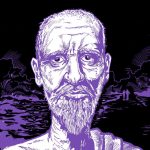
(Artwork: Mester Csaba)