

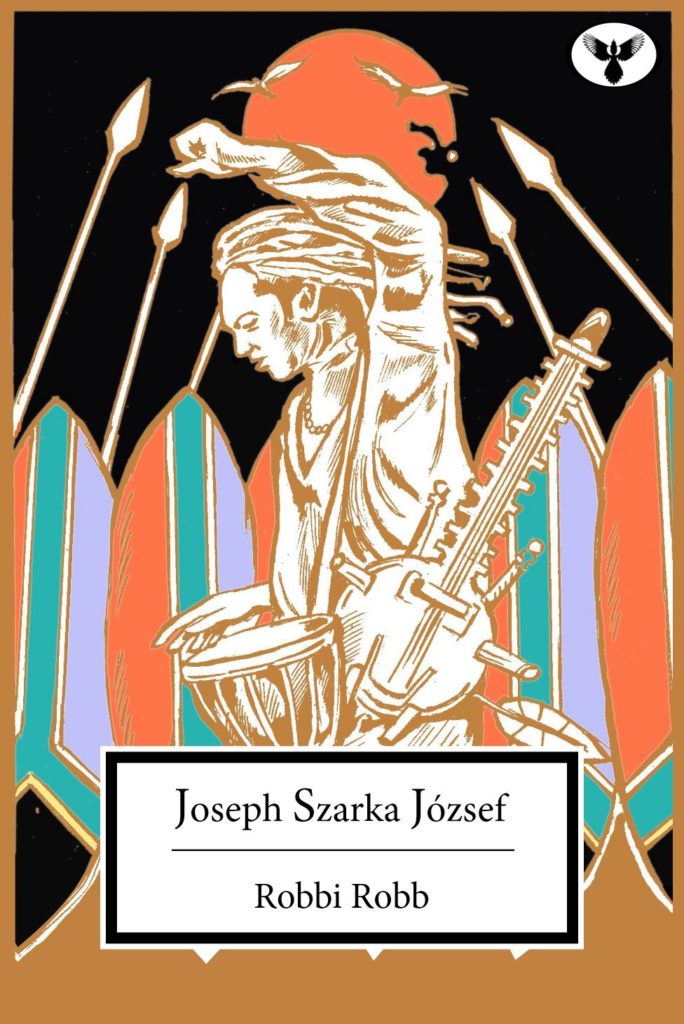
Tribe After Tribe: Everything and More
Fundamental building blocks of my personality fixed in my early twenties are connected to Robbi Robb, to his band called Tribe After Tribe and to Megaforce Records that released their career-defining eponymous album.
Being 18 years old, I wrote my first letters to foreign bands and record companies in January 1990 hoping to become part of the metal underground introduced to me by Metallica Hungarica, the first Hungarian fanzine with fascinating enthusiasm; to help musicians around the world reach Hungarian fans. 1990. I can count on one hand how many people I knew who owned a personal computer at that time. The big boy living on the other side of our street had a ZX Spectrum. We played Pong with it. A wealthy high school classmate of mine had a Commodore 64. Cannot forget the earsplitting noise when he loaded a new game to the computer from a cassette player. There was no computer-related subject in the school yet. I wrote my letters by hand. Later on, my parents helped me to buy a brutally heavy, ancient typewriter machine. I led a list on the packages sent and received in a stout, A4 size, poison green, checkered book. It would be great to understand where the idea of the mailing book came from since I had no similar experience before. Decades later, it is evident that one of my particular characteristics is that I love to collect and analyze data.
It would be good to trace back, which was the first Megaforce release I had received from Michael Mazur. Vio-lence? Overkill? Mind Funk? Lucy Brown? King’s X? Warren Haynes?
One thing is for sure: the Tribe After Tribe album released in 1991 strummed strings in me that resonates ever since.
“I see those people
Bringing up children
Burying the dead
Just like us…”
The energetic rock music flavored with exotic tribal patterns brought such a universal approach to human existence that was brand new for me, but was easily accessible on the Gödöllő-Johannesburg axis.
The Hungarian Revolution of 1956 was a living history for me from my father’s recollections. I remember the events of Dimitrov square, or the hardships of emigration from his stories as if I would have been there. It helped me to understand Robbi Robb escaping apartheid-era South Africa, his longing for freedom.
It is no surprise that TAT found its home at Megaforce Records, since the company dreamed and established by Jon and Marsha Zazula, always supported those who fought against oppression and censorship. Somehow I loved everything without reservation the Zazula couple did. Everything felt right, progressive. Without noticing it, they had became role models for me. The fact that they released the first Metallica album and a string of genre-defining materials of Venom, Manowar, Anthrax, Testament is only an exciting rock historical addition to the human qualities they represent. I admired them for running a label together successfully and keep their marriage intact. After long years of hesitation, their example helped me convince my wife to join me to work at our own label in 2019. They gained further respect recently when I learned that after 40 years of marriage, they still live together, and the self-declared primary purpose of Jon’s life is to take care of his wife. No wonder they gave so many profound albums to us until 2001, when they sold their share in Megaforce to their favorite, most-trusted colleague. It is like a fairy tale.
They can be the ones, my Tribe After Tribe keytrack is about, but for me, Everything And More is the hymn of love I cherish for my wife since the first time I have heard that song. Thousands of memories are connected to that tune. It featured on the first compilation titled Punto Tapes 001 I did for our first car. Because of its lyrics and its guitar solo, it is in the Top10 of my all-time favorite songs list.
“there’s a film that i’d like you to see
about a girl (i think) you’ll understand
and if you fall in love with me i’m
just a hand if you need a hand”
The 1993 album titled Love Under Will is similarily influential, even its title echoed in my head for decades. It tells me that love has to lead our life, but we have to control our emotions with our minds to realize the best we can. The whole album is a masterpiece. Its sound is mindblowing, and a long string of beautiful songs rolls from it. Hold On. Ice Below. The Spell. Dance of the Wu Li Masters. I Spit. Nikita. Congo Sky. World Of Promise. Proud & Beautiful. Let’s Go Outside. Delight. The Lovers. I am under their spell ever since they were released.
The last piece in the TAT trinity is Pearls Before Swine, which does not sound so delicately as its predecessor, and contains some tracks that are aimlessly noisy. Still, there are magic moments on it like the trademark tribal drum fueled Lazarus, the Latin flavored Senior, the hypnotic Uh-Oh, or the miraculous Ballad Of Winnie that features Doug Pinnick’s unearthly vocals.
1st September of 1997, I was not aware that Robbi Robb was working with the singer, bass player of King’s X, but it was evident that we will drive to Vienna the next day to see Tribe After Tribe playing at the club called Arena. My friend, Laszlo Lenard, the editor of the Hungarian edition of Metal Hammer, called me in the afternoon to tell that Doug will play bass in the band. Supergroup of my dreams. I added the booklet of my Gretchen Goes To Nebraska CD to my Tribe After Tribe relics hoping to get it signed. The day after, in the yard of a factory building transformed into a rock club in the Viennese suburb, I met the whole band. Drummer, Mike Hansen wrote some lovely words into the booklet of the first Megaforce release of TAT. Doug was positively shocked that I found them on this secret three-stop mini-tour and drove from Hungary to see them. It was priceless to see his face when I asked him to sign the GGTN cover. I was able to surprise Robbi as well with the Black Poem Jugglers CD I got from a colleague at Sony Music South Africa, since he had not seen it before being released right after he fled from the country. I could not conclude an in-depth conversation about his music during the brief meeting before the show, but it is a treasured moment of my life, as well as the concert I recorded with my dictaphone, then burned on a CD with the help of Tom-Tom Studio.
Despite the lasting impression Robbi Robb had with these albums on me, his presence faded in the following years. After the second Three Fish album in 1999, I had to wait until 2002 to get new music from him in the form of a two-song promo CD featuring Eloise and Merryround Ago from the Enhanced Entrance album to be released that June. It was a minor disappointment for me because of the growing use of synthetic sounds and a sense of presence of mind-altering substance in the mix, but I was fortunate enough to know Robbi much more via a MySpace correspondence. It helped me to understand him and his art better, so the reception of M.O.A.B., the last Tribe After Tribe studio album to date, was easier. Even if it is less attractive, than the three magic albums released after Power, even if it is harder to relate to its lyrics full of biblical references than before, the essence is there: the love of freedom, the liberating power of love, the rejection of any form of injustice, the pledge of happiness.
“Put down the guns, put down the books, put away the pointing fingers of blame .. come away from the temples and into the fields, and there let us work together to eradicate disease and poverty from the face of the Earth. This is the ‘Mother Of All Battles’.”